
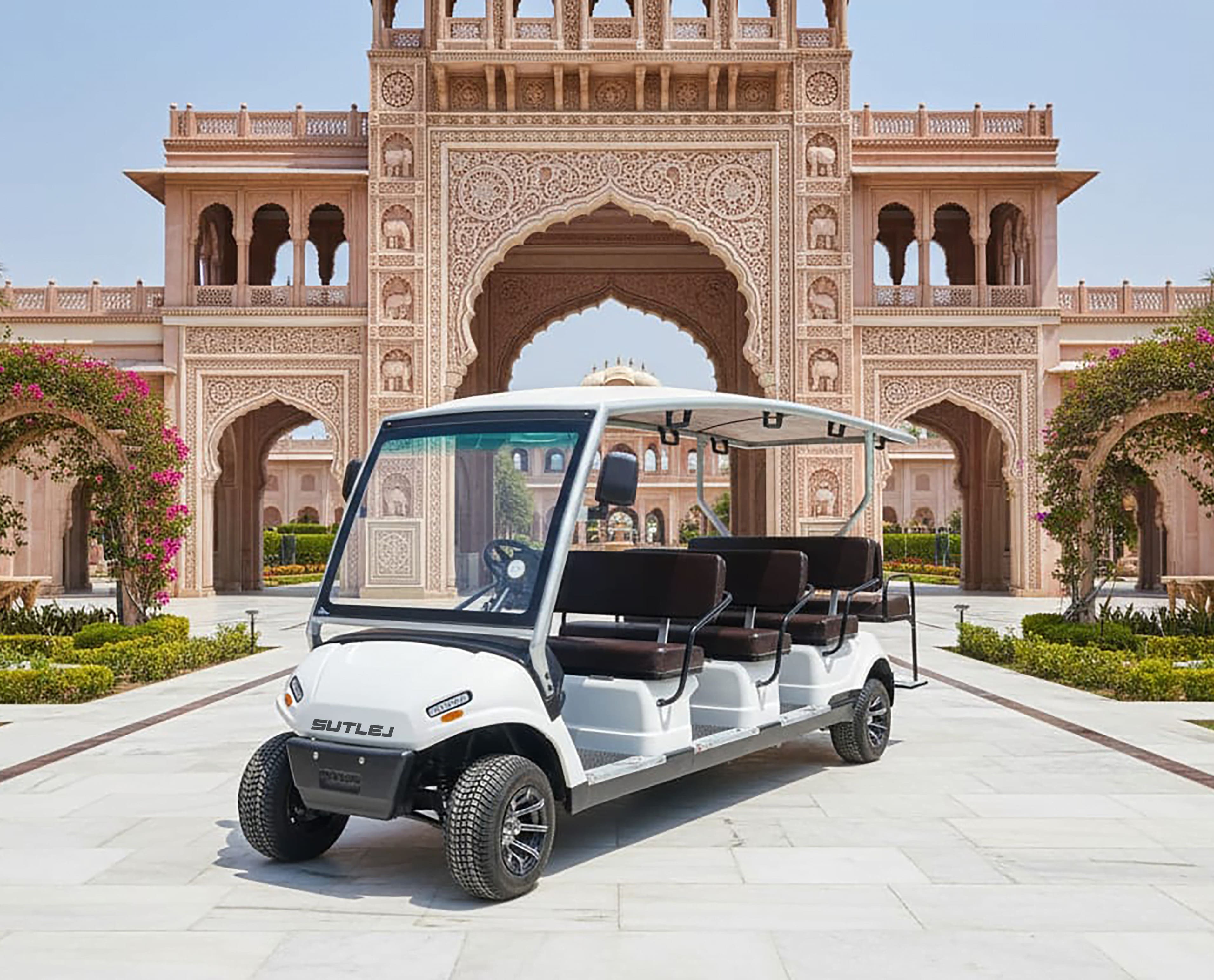
Facility teams managing transport across universities, tech parks, industrial estates, resorts, or temple complexes eventually face one core question: how many golf carts do I need to keep people moving without vehicles sitting idle half the day? No fixed number works for every campus. Whether a 12-seater electric golf cart or a few 4-seater carts makes more sense really comes down to the layout, how many routes you're running, and how demand ebbs and flows over the day. Sound golf cart fleet planning starts with these details, not with picking whichever vehicle looks most capable on a spec sheet.
Sutlej Automotives manufactures electric golf carts, electric golf buggy models, mini electric vehicles, e-bus units, and electric cargo vehiclesfor institutions across India. Before you buy golf cart units, whether a single e-cart vehicle or a full fleet, it pays to work through the math behind fleet sizing rather than the seat count alone.
What "Capacity" Actually Means in Fleet Planning
Seat count is only part of the picture. A complete campus vehicle capacity assessment looks at three things:
- How many people need to move at the same time
- How many separate routes need coverage at once
- How predictable or irregular demand is through the day
A cart with more seats covers the first point but says nothing about the other two, which is where a golf cart passenger capacity comparison earns its place before any purchase decision. An electric utility vehicleonly performs as well as the route it is placed on, regardless of seat count.
The Real Math: Cost Comparison of One 12-Seater vs Three 4-Seaters
Set price aside for a moment and look at what actually drives day-to-day running: route coverage, idle time, and staffing load.
| Factor | One 12-Seater | Multiple 4-Seaters |
|---|---|---|
| Route coverage | One route at a time | Several routes at once |
| Downtime impact | Entire service pauses | Only one unit is affected |
| Staffing need | Fewer drivers overall | More drivers, more scheduling |
| Parking footprint | Compact, single bay | Spread across several bays |
| Passenger wait time | Higher during peak hours | Lower, carts arrive more often |
The decision between a large seater and multiple small golf carts comes down to which pattern fits your campus movement. This is where golf cart fleet planning should begin, not end.
Operational Flexibility: Where Multiple 4-Seaters Win
Covering Multiple Routes Simultaneously
Large campuses rarely run on a single route. A tech park or industrial estate often needs carts moving between the main gate, work blocks, and parking areas at once.
- Multiple 4-seater golf carts cover these routes together, rather than one at a time. Add a 6-seater golf cart on busier internal stretches.
- No one waits for a single large vehicle to finish its round before being picked up.
Staggered Usage Patterns (Shift Changes, Class Breaks, Event Rushes)
Demand on a campus is rarely flat. It spikes during shift changes, class breaks, and event hours, then drops for long stretches in between.
- A fleet of smaller electric golf cart units can be deployed in the exact numbers a spike needs.
- Vehicles can be pulled back once demand settles, without leaving idle capacity behind.d
- A single large vehicle cannot scale up or down the way.
What Happens When One Vehicle Breaks Down
Institutions often overlook this risk until it shows up.
- A single 12-seater electric golf cart going in for servicing stops the entire transport plan.
- One unit down out of several 4-seater golf carts barely dents overall capacity.
- The rest of the fleet keeps covering routes without service gaps.
Where a 12-Seater Actually Makes More Sense
Single-Route, High-Volume Transport (e.g., Parking Lot to Main Gate)
Some campuses, such as resorts or airport premises, run one predictable route instead of several scattered ones.
- Moving visitors from a large parking area to a main gate or entrance is a fixed, repeated route.
- A 12-seater golf cart handles this more efficiently than several smaller carts working the same short stretch.
- Fewer vehicles on a single route also means less congestion at pick-up and drop-off points.
Reducing Driver/Staffing Requirements
Every vehicle removed from a fleet is one less driver to hire, train, and schedule.
- An electric utility vehicle, or an electric golf buggy suited to heavier footfall, can cover the work of several smaller units on one busy route.
- Fewer drivers directly support better electric golf cart fleet management
- Institutions already working with limited transport staff feel this benefit the most
Space and Parking Constraints on Campus
Not every campus has room to park and charge many small vehicles.
- A 12-seater golf cart, or a compact electric shuttle for university campus routes, needs far less parking footprint than several 4-seaters
- Charging points are simpler to manage for fewer, larger vehicles
- Campuses with limited allotted transport parking benefit most from this format
Common Fleet-Sizing Mistakes Institutions Make
- Buying for peak demand alone, then leaving most of the fleet idle the rest of the day.
- Choosing a 12-seater purely to look well-equipped, without checking if the layout supports one continuous route
- Overlooking how seasonal weather, including winter fog and long summer heat, affects daily usage and route timing.
- Skipping proper electric golf cart fleet management and only reacting once wait times or breakdowns become visible.
- Deciding between electric shuttles and multiple small carts without running a golf cart passenger capacity comparison first
- Comparing electric minibus price figures on their own, without weighing route coverage, staffing, and downtime together
- Assuming every campus needs an identical mix, when a university, a factory floor, and a resort move people differently
Final Thoughts: There's No One-Size-Fits-All Fleet
There is no universal answer to how many golf carts I need. It depends on your routes, your peak hours, and how much downtime your campus can absorb. Most institutions eventually settle on a blend rather than a single format:
- A 12-seater golf cart or an electric shuttle for university campus main routes
- A 6-seater golf cart or 4-seater golf cart for smaller, scattered movement across departments
- Mini electric vehicles or an electric cargo vehicle where staff and material movement overlap
The large-seater vs. multiple small golf carts debate rarely has one winner. Any campus vehicle capacity plan should account for both formats, and for local weather too, since carts running through Punjab's winter fog and summer heat need to hold up across both extremes, not just the easy days.
Plan Your Campus Fleet with Sutlej Automotives
Sutlej Automotives builds electric golf carts, electric golf buggy models, mini electric vehicles, e-bus units, and electric cargo vehicles from our facility in Jalandhar, Punjab, for institutions across India. Getting fleet sizing right comes down to matching seat count, route pattern, and staffing to how your campus actually moves, not to comparing electric minibus price figures on their own.
Talk to our team about your routes, peak hours, and parking layout, and we will help you decide between a 12-seater golf cart, an e-cart vehicle, or electric shuttles built for wider campus routes. If you already run vehicles on your premises, we can also set up a test drive, arrange authorised service and maintenance, or help you source genuine parts and accessories.
Whether you are ready to buy golf cart units for a single route or planning a complete electric golf cart fleet management strategy across departments, get in touch with Sutlej Automotives and build a fleet plan around how your campus really runs.

Sutlej Automotives
Driving Sustainable Mobility in India


