
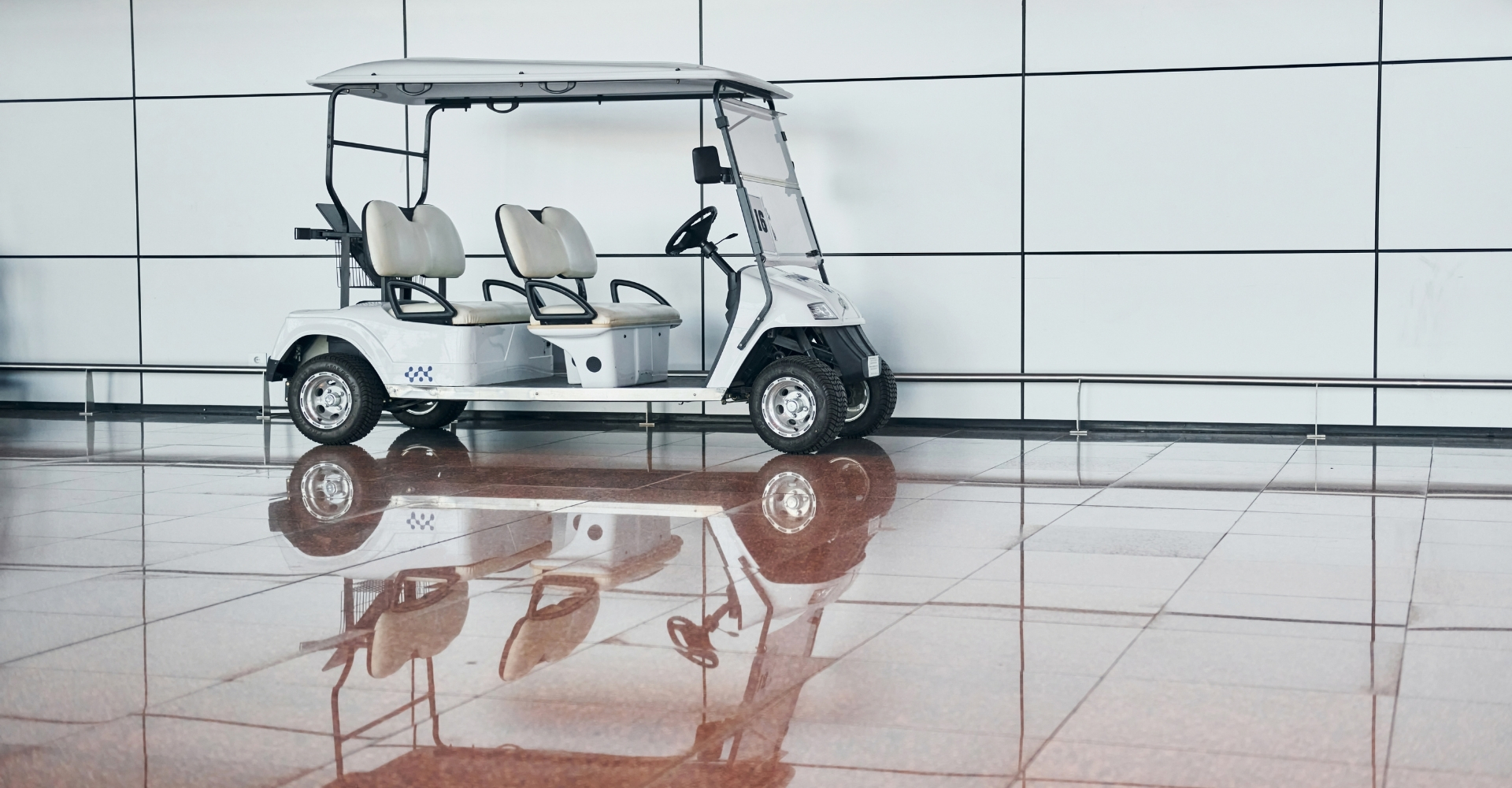
Every airport in India is dealing with the same pressure. Terminals keep expanding, passenger volumes keep climbing, and ground operations are expected to keep pace. A poor airport golf cart choice shows up fast: carts that cannot handle your terminal surface break down early, poor battery range holds up transfers mid-shift, and undersized cargo variants slow your baggage team on peak travel days.
Understanding Airport Mobility Needs
An airport is a demanding environment for any vehicle. Surfaces shift between indoor floors, outdoor tarmac, and connecting bridges, with long operational shifts throughout. Ground teams deal with the same pain points across every terminal size:
- Elderly and differently-abled passengers who cannot walk long distances between gates
- Baggage delays that cause missed connections when cargo transfers fall behind schedule
- Staff fatigue from covering hundreds of metres on foot every shift
- Fuel-powered vehicles producing exhaust and noise inside enclosed terminal spaces
An airport golf cart for passenger transport addresses each of these when the right type is matched to the right function. The common mistake is assuming any cart will do any job.
Types of Airport Golf Carts for Passenger & Cargo Movement
Before you buy golf cart units, map your operational needs against what is available. Each type serves a distinct purpose.
| Cart Type | Best Used For |
|---|---|
| 4 or 6 Seater Passenger Cart | Gate transfers, assisted mobility, terminal crossings |
| VIP Custom Cart | Premium guest shuttles, private lounges, charter terminals |
| Cargo Golf Cart Airport | Baggage handling, apron logistics, supply movement |
| Staff Utility Cart | Ground crew transfers, maintenance personnel movement |
Most busy airports need more than one. Running a single cart type across all four functions is where gaps appear when traffic peaks.
Electric vs Fuel-Based Golf Carts for Airports
Fuel-powered carts produce exhaust and noise that do not belong inside a terminal. Many airports have moved to restrict them entirely to enclosed spaces. An electric golf buggy handles the same workload silently, with zero emissions and lower running costs across a fleet's lifespan. Why an e-cart vehicle suits airport operations:
- Silent running that does not disrupt PA systems or passenger communication
- Zero tailpipe emissions inside terminals and tarmac zones
- Fewer moving parts than combustion engines, meaning less servicing and less downtime
- Aligned with green airport certifications and national sustainability commitments
The electric utility vehicle is already the operational standard at well-run terminals nationwide.
Key Factors to Consider When Choosing an Airport Golf Cart
-
Battery Range
Your electric golf cart for airport use must complete a full operational shift on one charge. Lithium-ion batteries hold capacity reliably across repeated cycles and perform better in continuous, high-frequency use than older battery types.
-
Suspension and Surface Handling
Airport surfaces are not consistent. Indoor flooring meets outdoor tarmac, which meets connecting bridges with gradients and joints. Suspension built for this variety keeps the cart running longer and passengers noticeably more comfortable.
-
Safety Standards
Every airport utility vehicle operating in passenger zones must be equipped with hydraulic brakes, seat belts, headlights, taillights, and reflectors. These are not optional features to weigh against the budget. They are the minimum specifications.
-
Cargo Platform Design
For a cargo golf cart airport application, platform width, load-securing points, and turning radius all affect how fast your baggage team works during busy periods. Platforms designed for lighter international loads do not suit Indian operations.
Features to Look for in Airport Golf Carts
Weather canopies protect passengers during tarmac transfers. Padded seating reflects the service quality your terminal offers. Branded livery makes every cart a visible part of your airport's identity. Sutlej Automotives builds all of this into their airport range: Lithium-ion batteries, robust suspension for Indian airport surfaces, hydraulic braking, and full customisation across seating, canopy, cargo platform, and branding. Each fleet is configured to the airport's actual requirements, not a generic catalogue standard.
Choosing the Right Capacity for Your Airport
Regional Airports run well with a 4-seater electric golf buggy for passenger assistance alongside a dedicated cargo variant. Mid-Sized Airports benefit from a mixed fleet of 4- and 6-seaters, with at least one VIP configuration for premium transfers. Large International Terminals need full configurations across passenger, VIP, and cargo golf cart airport categories. Standardising the fleet under a single manufacturer keeps spare parts and service turnaround times consistent.
Tips to Choose the Best Airport Golf Cart Supplier
Indian Manufacturing Background
A supplier located in India designs for Indian topography, climate and load. Spare parts are readily available, and repair service is prompt.
Customisation Capability
Your airport has specific requirements. The right supplier configures to your specifications rather than working around a fixed range.
-
After-Sales Support
Mini electric vehicles running daily for multiple years require AMC coverage and a service network that responds promptly.
Airport Expertise
Airport fleets aren't the same as those found at resorts or on campuses. Experience in aviation is important.
Sutlej Automotives has been designing and manufacturing vehicles since 1935. Call Sutlej Automotives for a free quote on models for your airport.
Sutlej Automotives: Built for Indian Airports, Backed for the Long Run
The right airport golf cart decision plays out in operations every day. It shows how quickly passengers reach their gates, how efficiently cargo turns around, and how your fleet holds up when the terminal is at full capacity. Sutlej Automotives handles the full process from consultation through delivery and ongoing service. Every golf cart for sale in their range is built for the conditions at Indian airports. Reach out to the Sutlej team today and get your fleet configured to meet its needs.

Sutlej Automotives
Driving Sustainable Mobility in India

