
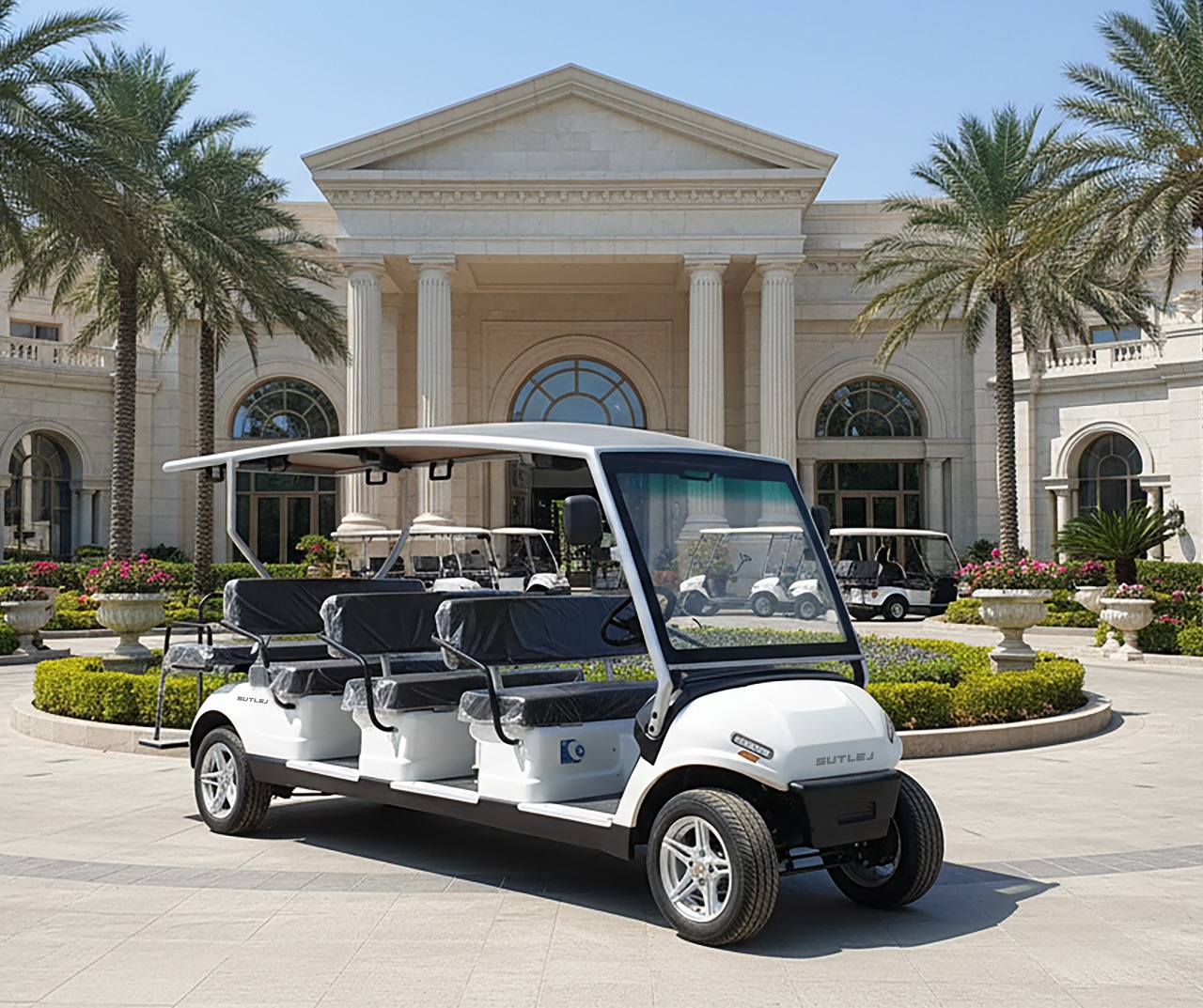
Walk into any large temple complex in India, and you will notice the same scene. Slow-moving crowds, long stretches of paved walkways, and somewhere in the crowd, an elderly pilgrim stopped to rest because her knees would not carry her further. At major sites from Tirupati in the south to Haridwar in the north, covering the full premises on foot is a genuine barrier for many devotees. Battery-operated carts for temples solve this without changing what makes these places sacred.
The Growing Need for Mobility at India's Sacred Spaces
India's major religious complexes are vast. The distance between the entrance and main sanctum at a site like Ujjain, Shirdi, or Tirupati spans hundreds of metres of courtyards, corridors, and paved paths. For most visitors, this is manageable. For many, it is not. Who needs mobility support at the temple premises?
- Elderly devotees who cannot sustain long walks, especially during peak summer heat, across North and South India
- Differently-abled pilgrims and wheelchair users who need ground-level transport
- Families travelling with young children or infants
- Visitors during Navratri, Kumbh Mela, and Diwali, when crowd density creates real safety concerns
Why Electric Carts Are the Perfect Fit for Religious Sites
A petrol or diesel vehicle simply does not belong in a temple environment. The noise, exhaust, and fuel smell work against everything a place of worship is designed to offer. Electric golf carts and eco-friendly vehicles for religious sites solve this in a way no other vehicle type can.
Four reasons electric carts belong in temple complexes
-
Whisper-Quiet Operation
An electric golf buggy produces no engine sound. It moves through a courtyard or beside a corridor without disturbing prayer, breaking ambient calm, or drawing any attention to itself. -
Zero On-Site Emissions.
The scent of incense and flowers defines a temple visit for most Indians. Low-emission vehicles for holy sites preserve that atmosphere entirely, with no exhaust and no fuel odour competing with it. -
Fits Existing Infrastructure
A well-built e-cart vehicle is compact enough to navigate narrow heritage pathways and tight turns without requiring structural changes to the premises. -
Full-Day Battery Performance
Temple premises operate from early morning to well past sundown. Electric carts with lithium-ion batteries run across a full operational day without mid-day recharging.
Key Features to Look for in a Temple-Ready Electric Cart
Not every mini electric vehicle suits a religious setting. A golf cart for mandir complex use has requirements that general-purpose vehicles often do not meet.
| Feature | Why It Matters |
|---|---|
| Seating configuration | 4 to 6-seater options serve family groups far better than standard 2-seater models. |
| Battery technology | Lithium-ion offers longer range, faster charging, and lower maintenance. |
| Ground clearance | Heritage stone paths and uneven flooring need proper suspension. |
| Covered canopy | Critical for protecting passengers during Rajasthan or Tamil Nadu summers. |
| Turning radius | Narrow temple corridors need a compact, manoeuvrable build. |
| Braking system | Hydraulic disc brakes are essential on inclined paths for passenger safety. |
When you decide to buy golf carts for religious premises, evaluate the manufacturer's service network as carefully as you evaluate the vehicle itself. A cart that develops a fault during peak pilgrimage season, with no nearby support, creates a serious operational problem.
The Environmental and Community Impact
Temple trusts in Udaipur, Jaipur, Amarkantak, and Indore manage some of India's most heritage-sensitive premises. Switching to an electric utility vehicle for on-campus transport reduces carbon emissions, lowers noise levels, and cuts running costs because electric motors have far fewer moving parts than combustion engines. It also means zero contact between the exhaust and the ancient stonework. Millions of devotees visit these sites yearly, and seeing an electric cart for temple trust operations running cleanly and silently sets a visible standard for how sacred spaces can lead the way in sustainability.
How to Choose the Right Electric Cart for Your Religious Site
The right electric golf cart for you depends on how your premises are laid out, who your visitors are, and what's available from suppliers in your area. Start by figuring out where mobility is needed and how many carts you'll actually require. Then match seating capacity to your typical visitor groups. A large temple complex often benefits from 4-seater passenger carts for families alongside a compact electric utility vehicle for staff and goods movement. For trusts hosting large annual festivals, short-term rental of an electric buggy for pilgrimage tourism lets you scale without permanent capital investment.
Sutlej Automotives: A Trusted Partner for Sacred Spaces Across India
Sutlej Automotives has been a vehicle manufacturer since 1935. The region's hot summers, monsoons and harsh winters have influenced the way Sutlej manufactures vehicles, which have proven to withstand a range of conditions across India. The range includes 2-seater to 8-seater electric golf carts, electric golf buggies, mini electric vehicles, and electric utility vehicles, all built for Indian terrain. Every model is customisable in terms of seating, canopy, colour, and branding. A nationwide service and spare parts network covers sites across Goa, Chennai, Hyderabad, Mumbai, Manali, and beyond. If your temple trust or pilgrimage site management is ready to improve accessibility and adopt cleaner on-campus transport, Sutlej Automotives is the right place to start. Get in touch today to request a quote, discuss your requirements, or explore leasing options for your next major festival.

Sutlej Automotives
Driving Sustainable Mobility in India

