
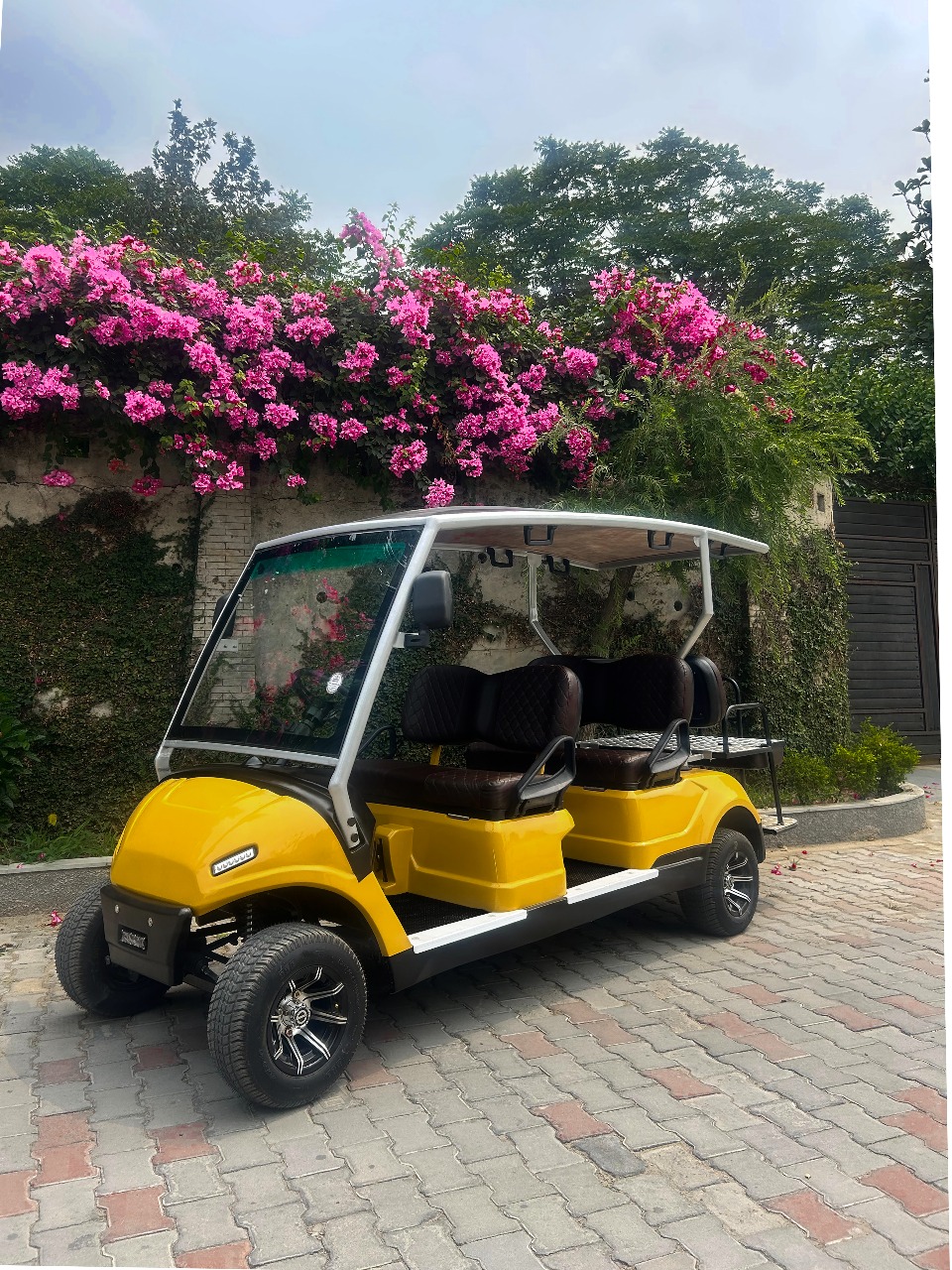
Every industrial estate in India has the same picture. A diesel vehicle crawls between warehouse gates, idles, then moves to the next stop. By afternoon, the compound carries that familiar mix of exhaust and noise. Most facility managers accept this as standard, but the cost of that acceptance builds steadily every quarter.
Switching to an electric golf cart for industrial use in India does not require a sustainability mission. It requires honest math.
The Hidden Cost of Diesel Vehicles in Industrial Estates
Diesel engines are designed for road distances, not for intra-estate runs where the engine barely reaches temperature before idling again. Fuel burn per useful kilometre is high, and component wear is disproportionate to the work done. These are the costs that rarely get totalled together:
- Unscheduled Servicing: Oil changes, filter replacements, and coolant checks that pull vehicles off the floor with little warning
- Ventilation Overhead: Diesel in enclosed warehouses demands air management that would not otherwise be needed
- Compliance Pressure: India's emission norms are tightening, especially for estates near residential and municipal zones
- Operational Gaps: A diesel vehicle in a service bay is not moving workers or materials
Facilities in Punjab, Haryana, Gujarat, and the zones around Chennai and Hyderabad face another pressure: summers exceeding 40 degrees Celsius accelerate coolant depletion and add servicing cycles during the busiest time of year. When all of this is totalled, the decision to replace diesel vehicles with electric carts tends to make itself.
What Is Environmental ROI and Why Does It Matter for Industries?
Environmental ROI is the return a facility earns from reducing its environmental impact, alongside the direct financial savings from the same decision. Indian procurement partners and regulators now require documented emissions data during vendor qualification and license renewals, making this a live business concern rather than a reporting formality. A move to mini electric vehicles and electric golf carts delivers on both fronts:
- Elimination of tailpipe emissions inside the facility
- Removal of diesel procurement, storage, and spillage risk from daily operations
- Cleaner documentation for ISO 14001 audits and regulatory filings
- Lower noise levels across the facility, reducing occupational health exposure
Each electric utility vehicle that replaces a diesel carrier on your estate directly reduces the emissions data included in compliance filings.
Real Environmental Benefits of Switching to Electric Golf Carts
-
Zero Emissions at the Source
An electric golf cart produces no exhaust at the point of use. Inside factories and warehouses, air stays clean without additional ventilation infrastructure. Workers who previously spent shifts near running diesel engines see a direct reduction in particulate matter exposure. -
Near-Silent Operation
An e-cart vehicle runs almost silently. Where workers communicate, operate precision equipment, or handle sensitive processes, lower ambient noise is a practical improvement in safety and efficiency. -
Lower Carbon Output Over Time
An electric golf cart for industrial use in India produces lower lifecycle emissions than a diesel doing equivalent short-distance work, as India adds more renewable capacity, that carbon gap grows without any modification to the vehicle. -
Reduced Fluid Risk on the Floor
Diesel vehicles develop oil, coolant, and hydraulic leaks over time, creating slip hazards and drainage contamination. Mini electric vehicles carry far fewer fluid systems, reducing that risk substantially.
Which Industrial Applications Benefit Most?
- Manufacturing Units and Factory Floors Workers travel between production lines, QC stations, and dispatch bays many times each shift. A quiet, emission-free industrial electric vehicle keeps movement efficient without adding exhaust to enclosed zones, which matters most in pharmaceutical, food processing, and precision manufacturing.
- Warehouses and Distribution Centres. An
- Estates Near Residential Zones Industrial estates in Jalandhar, Pune, and Hyderabad that border residential areas face scrutiny around air quality and noise. Electric carts produce cleaner compliance records and reduce friction during license renewals.
How to Calculate Your Own Environmental ROI Before Buying
Before you buy golf cart units, run three audits to get numbers you can act on.
-
Audit Your Current Diesel Fleet
Track intra-estate trips over one week: distance, fuel consumption, and service frequency per vehicle. Most facilities find their diesel vehicles idle more than they are in motion, which makes the per-kilometre emissions figure worse than the headline fuel cost suggests. -
Estimate Electricity Cost for Equivalent Coverage
A standard electric golf cart for industrial use in India can cover a full day of intra-estate travel on a single charge. Apply your actual electricity tariff to the kWh needed for equivalent daily coverage. For most Indian facilities, this figure is lower than the current diesel spend before maintenance savings are factored in. -
Map Maintenance and Downtime Costs
An e-cart vehicle needs brake checks, tyre maintenance, and battery monitoring. A diesel vehicle needs oil changes, fuel system servicing, and engine overhauls. Total both annual maintenance loads, then add unplanned downtime costs, which diesel fleets generate more often. The combined savings across these three areas are the financial core of the environmental ROI calculation.
Why Sutlej Automotives Electric Golf Carts Are Built for Indian Industrial Conditions
Sutlej Automotives has manufactured vehicles since 1930 in Jalandhar, Punjab, where summers cross 40 degrees Celsius, and winters bring genuine frost. Nine decades of building under those conditions have shaped an electric golf cart manufacturer in India that genuinely understands what Indian industrial operations demand. It is one reason Sutlej-built vehicles perform reliably where generic imports do not. When facilities decide to buy golf cart units for their estates, the range includes EV tubular and lithium-ion battery configurations, seating for 2 to 8 passengers, electric utility vehicle variants for cargo transport, and custom builds for specific layout needs. Industrial electric vehicle solutions from Sutlej are already running in factories, warehouses, airports, and tech parks across India. Facilities looking to replace diesel vehicles with electric carts gradually can also explore Sutlej's rental and leasing options. Sutlej has been manufacturing electric golf carts in India for decades and knows what different facilities actually need. If you're figuring out the right fleet size, reach out at sales@sutlejautomotives.com or call +91-98154 76017 to get a quote built around your layout and requirements.

Sutlej Automotives
Driving Sustainable Mobility in India

