
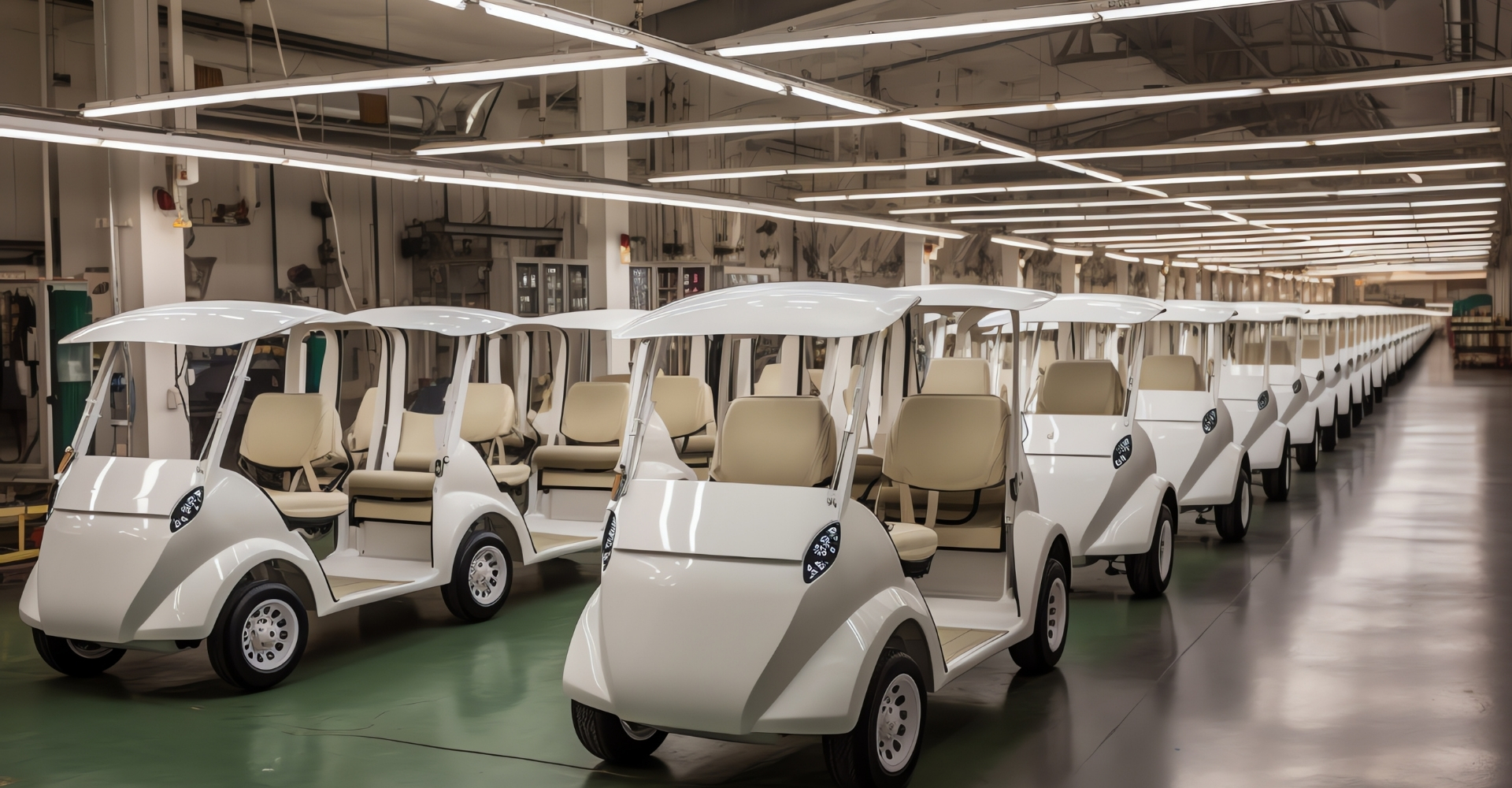
Indian industries are under real pressure. Emission norms are tightening, fuel costs keep climbing, and global clients want documented sustainability credentials before signing supply agreements. Internal transport, the diesel loaders and petrol utility carts moving people and goods inside facilities all day, is one of the most fixable sources of that emissions load. This is where EV adoption in industries makes an immediate, measurable difference. Sutlej Automotives has been building electric vehicles for industrial use for decades. Their range includes electric golf carts, electric golf buggies, mini electric vehicles, and cargo variants, all designed to operate within factories, airports, and campuses across India, built to handle terrain and weather that most standard vehicle manufacturers overlook.
Understanding Carbon Footprint in Industrial Operations
Most facility managers think about carbon output in terms of production processes and heavy machinery. Internal transport rarely gets the same scrutiny, but it should. Diesel and petrol vehicles on factory floors and in warehouses continuously emit exhaust across multiple shifts, accumulating in enclosed spaces where workers spend their entire working day.
Where Industrial Emissions Actually Come From
- Goods movement between departments, storage areas, and loading docks
- Personnel transport across large floor areas or multi-building campuses
- Cargo handling between production zones and dispatch areas
Each of these is a daily, repetitive operation. Switching even part of this fleet to industrial electric vehicles removes a steady source of both air pollution and operating costs.
What is EV Adoption in Industries?
Electric vehicle (EV) uptake in industrial sectors involves swapping combustion-fuelled internal transport with battery-powered industrial transport. They're not EV passenger vehicles modified for industrial use. Electric utility vehicles, e-cart vehicles, and electric golf carts are engineered for tight spaces, repeated stop-start use, and heavy daily duty cycles. Facilities have fixed internal routes, predictable load requirements, and idle downtime when vehicles sit unused. These are exactly the conditions where electric vehicles perform best and where moving away from fossil-fuel transport is most straightforward.
How EV Adoption Reduces Carbon Footprint
Every petrol or diesel vehicle replaced by an electric utility vehicle eliminates tailpipe emissions for every trip it makes. Across dozens of daily trips and hundreds of operating days, that produces a real, documented reduction in your facility's carbon output.
Zero Exhaust Inside Facilities
Electric golf carts and e-cart vehicles produce no exhaust at all. Inside covered production halls, warehouses, or terminals, this directly improves air quality for workers and removes the need for additional ventilation to manage fumes from internal combustion.
More Efficient Energy Use Per Trip
Battery-operated vehicles consume energy far more efficiently than combustion engines at the low speeds and short distances typical of industrial operations. This efficiency advantage is largest in exactly the kind of repetitive, close-range work these vehicles are built to handle.
Lower Maintenance, Lower Embedded Carbon
Fewer moving parts mean fewer replacements and less waste generated over the vehicle's lifetime. The maintenance footprint of an electric vehicle is smaller than a fuel-powered equivalent in both cost and environmental terms.
Key Benefits of EVs for Industrial Sustainability
| Benefit | What It Means for Your Facility |
|---|---|
| Zero tailpipe emissions | Cleaner air in enclosed and semi-enclosed workspaces |
| Quiet operation | Lower noise levels across all shift hours |
| Reduced running costs | Electricity costs less per kilometre than petrol or diesel |
| Minimal servicing | No oil changes, no fuel system maintenance |
| Scalable fleet | Add vehicles as operations grow, without infrastructure overhaul |
Sustainable industrial transportation also feeds directly into compliance. Large enterprise clients and export buyers now require facilities to demonstrate sustainability benchmarks, and a documented EV fleet is concrete proof of that commitment.
Use Cases of EVs Across Industries
Sutlej Automotives vehicles are already operating across a wide range of environments. Here is where EV for factories and industries delivers the most visible results:
-
Manufacturing Plants
Electric golf carts move supervisors, quality teams, and safety personnel across large production floors without disturbing ongoing operations. No fumes, no engine noise interfering with the work environment.
-
Airports and Transport Hubs
The electric golf buggy handles passenger mobility and staff movement inside terminals where diesel equipment simply cannot operate. Sutlej builds airport-specific vehicle configurations for exactly this purpose.
-
Educational and Corporate Campuses
Mini electric vehicles connect buildings, shift maintenance crews, and transport visitors efficiently. Some of the institutions that have brought Sutlej golf carts into their daily campus operations.
-
Logistics and Warehousing
E-carts transport goods from staging to storage areas and to the dispatch area, avoiding the air-quality issues of enclosed fulfilment areas.
-
Hospitality Properties
Electric golf carts transport guests across the resort grounds, where clean, quiet operation is part of the guest experience.
How Industries Can Transition to EVs
It is not necessary to replace an entire fleet. This allows facilities to keep operating while working towards full conversion to EVs.
- Determine the most-used internal routes, and the vehicles that travel them.
- Select vehicles for the task: electric golf cart or electric golf buggy for people; electric utility vehicle or mini electric vehicle for goods; cargo models for larger loads
- Place charging points in existing parking lots, as most have the necessary electrical infrastructure.
- Launch a pilot project on the busiest internal route, assess the results, and build on them.
Sutlej Automotives does it all. They know the Indian market and how to service fleets.
The Future of EV Adoption in Industrial Sectors
Businesses investing in EVs for factories and industries today are positioning ahead of compliance requirements that will tighten across more sectors in the years ahead. Mini electric vehicles and electric utility vehicles are the most practical starting points because routes are fixed, infrastructure is manageable, and results are visible quickly.
Drive Change with Sutlej Automotives
If your facility is ready to reduce its carbon footprint in industries through practical, proven electric transport, Sutlej Automotives has the range to meet your requirements. Whether you want to buy golf cart solutions for a campus, deploy an electric utility vehicle fleet across a plant, or equip an airport terminal with an electric golf buggy, these vehicles are built for these exact applications. With over 90 years of manufacturing heritage behind them, Sutlej delivers working solutions, not estimates. Contact Sutlej Automotives today to discuss your fleet requirement and get a recommendation tailored to your facility.

Sutlej Automotives
Driving Sustainable Mobility in India

