
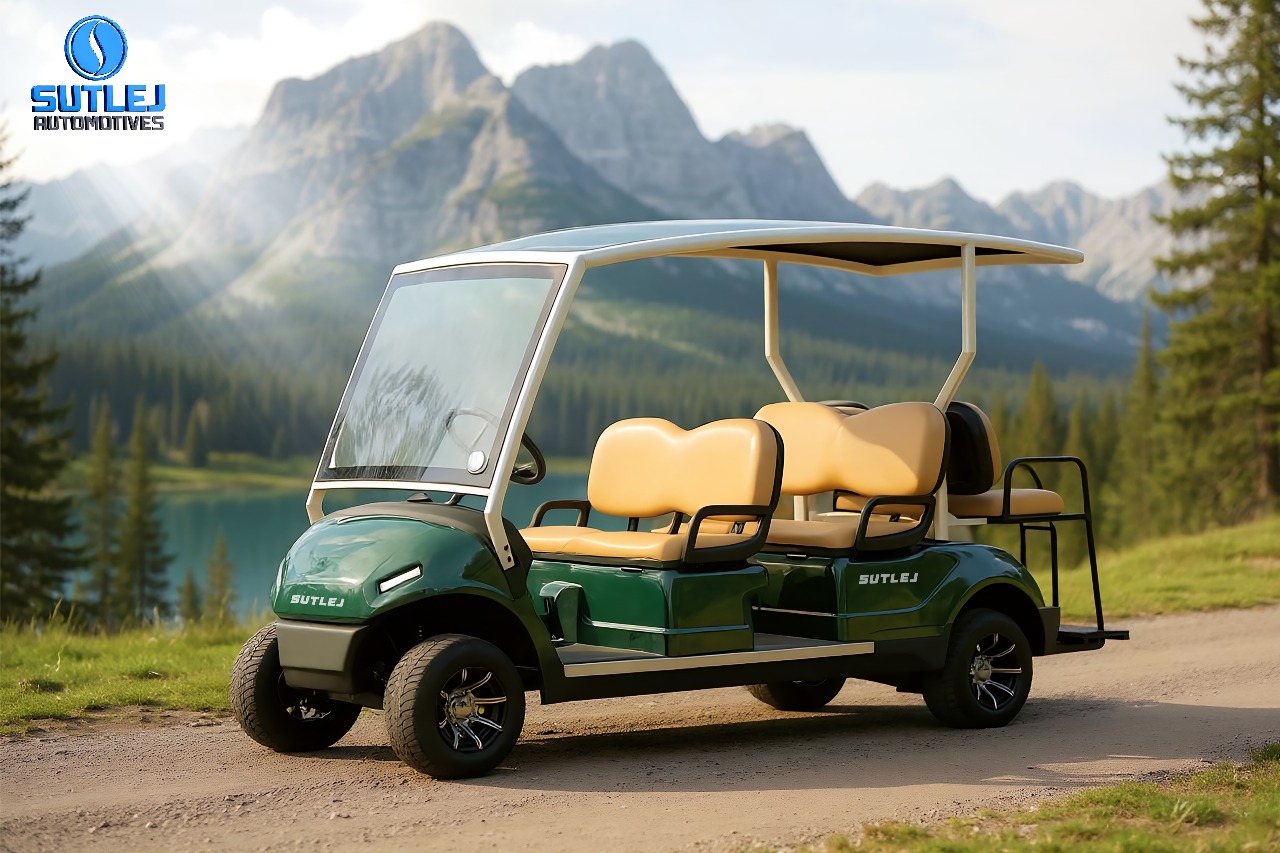
Managing a large campus in India comes with a transport problem that rarely gets discussed. The distances are real, the weather is brutal for most of the year, and the vehicles that work on public roads are too large, too loud, or too polluting for internal campus use. These situations happen every day: a maintenance worker trying to reach the far end of an IT park in Hyderabad, a guest walking to an administrative block at a Bhopal university, a differently-abled student getting to class across a sprawling Punjab campus. The electric golf cart has become the practical answer to this problem, and Indian institutions are catching on fast.
The Growing Need for Smarter Campus Mobility in India
Most Indian campuses were not designed with internal transport in mind. As they have grown in size, the gap between where people are and where they need to be has widened. Walking is not realistic in the peak summer heat of North India or during the monsoon months on coastal campuses in Chennai and Mumbai. Diesel vehicles are noisy and polluting near academic spaces. Buses need fixed routes. Auto-rickshaws do not belong inside a controlled campus. Campus electric vehicles meet all the constraints: compact for internal roads, quiet for academic zones, and clean enough to support the sustainability goals now required by accreditation bodies of Indian institutions.
How Universities Are Using Electric Golf Carts
Universities have found several concrete applications for electric golf carts across their daily operations.
-
Visitor and VIP Movement:
Guests are taken directly from the main gate to offices or conference halls, avoiding the long walk across campus. -
Support for Differently-Abled Individuals:
Students and staff who cannot cover large distances get reliable transport as a matter of routine. -
Health Centre Response:
A dedicated cart vehicle can reach any part of the campus quickly when the clinic needs it. -
Admission Season Tours:
Parents and prospective students get a comfortable guided experience rather than an exhausting walk in the heat. -
Faculty Inter-Departmental Movement:
Staff moving between labs, departments, and administrative blocks saves real time each day.
For universities with NAAC accreditation or green campus targets, deploying an electric golf cart is one of the few decisions that works as both a sustainability action and a daily operational improvement.
How Tech Parks and IT Campuses Benefit from Electric Golf Carts
Golf carts for tech parks in India solve a different set of problems, though the underlying challenge is the same.
| Operational Problem | What an Electric Cart Does |
|---|---|
| Distances between towers and parking | On-demand shuttle runs without scheduling |
| Vendor and material movement | Electric utility vehicle handles cargo without a separate fleet |
| Security and FM patrol | Silent, efficient coverage that does not disturb tenants |
| Employee gate-to-building movement | Reduces crowding and improves the daily experience |
| Guest management at conferences | Organised, professional transport within the campus |
Tech parks in Noida, Gurugram, and Pune that host thousands of employees are now treating internal mobility as part of the tenant experience. A campus that is hard to navigate is something tenants notice and remember.
Key Benefits of Electric Golf Carts for Campus Use
-
Zero Emissions for Green Campus Goals
An electric golf buggy produces no tailpipe emissions. For institutions with green building ratings or sustainability reporting requirements, replacing diesel with a clean electric fleet is a measurable, documentable gain. -
Quiet Operation Near Sensitive Spaces
ini electric vehicles run near-silently. Near lecture halls, exam centres, and open office floors, that distinction matters. A noisy vehicle passing through an academic corridor repeatedly is a real distraction over a full working day. -
Engineered for Indian Conditions
Sutlej Automotives builds every electric golf cart for Indian roads and weather. Suspension handles uneven internal campus roads. Rust-resistant bodies hold up on humid coastal campuses. Batteries are tested for the heat that North Indian campuses deal with from April through June. -
Configurations That Match Real Needs
From a 2-seater for VIP transport to an 8-seater for group shuttles, the Sutlej range covers most campus scenarios. The electric utility vehicle variant handles cargo, tools, and maintenance equipment, so the same manufacturer covers the full internal transport picture.
How to Choose Right Electric Golf Cart for Your Campus
Match the vehicle to the job. An electric golf buggy is well-suited to passenger transport. An electric utility vehicle is well-suited for maintenance and cargo. Most campuses of any real scale will need both. Choose the right battery. Sutlej offers Lithium-Ion for faster charging and longer lifecycle, and EV Tubular for campuses that prefer a proven, cost-effective option for consistent daily use. Don't just plan for one vehicle. A single cart is a good starting point, but campuses often outgrow their fleets faster than expected. Think through your campus zones, peak movement hours, and how demand might shift before you settle on a number.
Why Sutlej Automotives Is the Preferred Choice for Campus Electric Carts
The Sutlej Premium range includes 2-seater and 4-seater electric golf carts with a 48V AC Motor, Lithium-Ion battery, and an Italian Premium Controller, all built for Indian use. Customisation covers seating, canopy style, campus branding, cargo fittings, and colour. For institutions not ready for a full purchase, Sutlej also offers rental and leasing options. Nationwide service and spare parts support covers cities from Jalandhar to Hyderabad and from Pune to Goa.
Make Your Campus Work Better with Sutlej Automotives
Internal campus mobility is a daily operational concern with a direct, practical solution. To explore or discuss requirements, reach out to Sutlej Automotives today.

Sutlej Automotives
Driving Sustainable Mobility in India

