
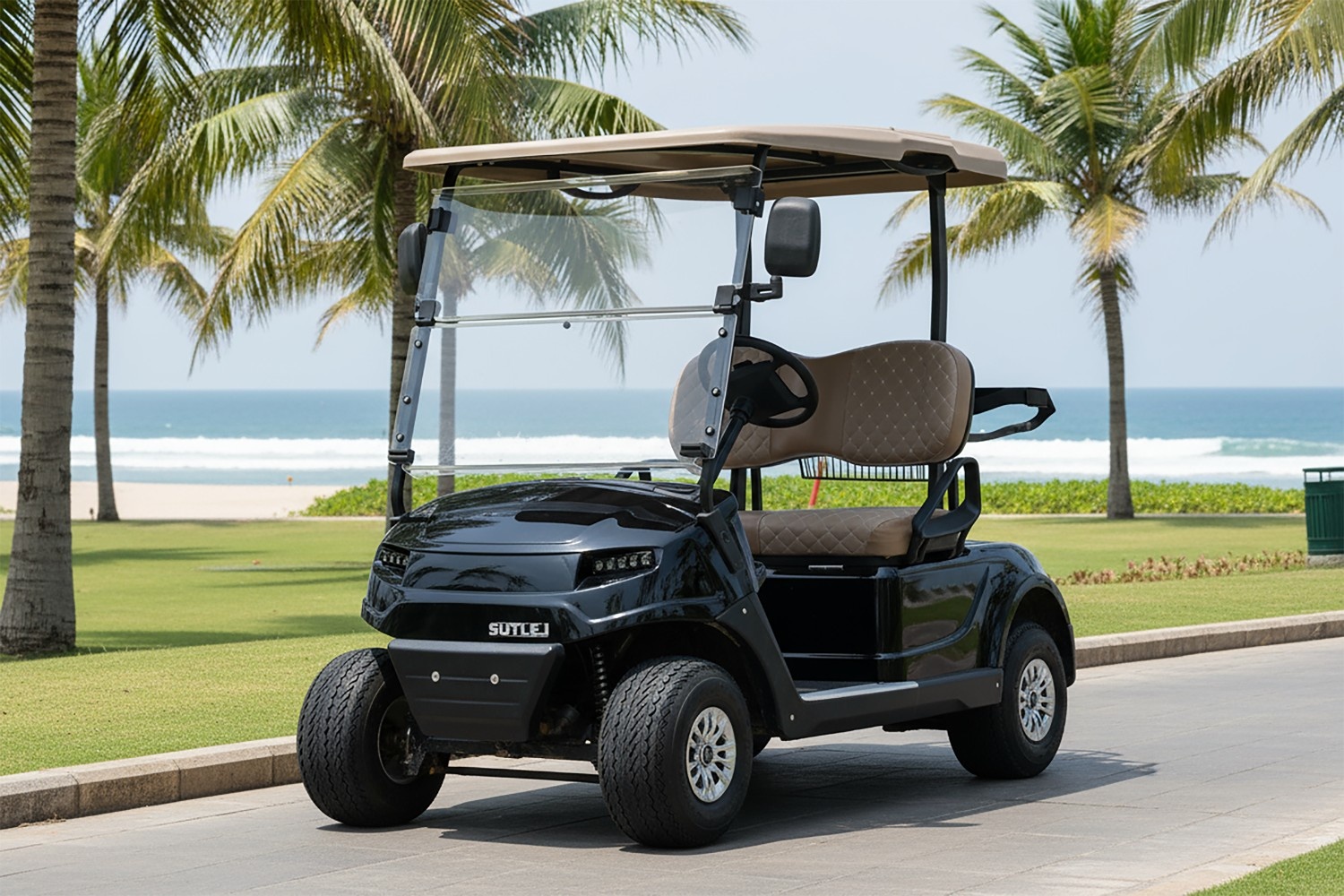
The phrase "golf cart" still makes most people picture a golf course. That image is outdated. Walk through a busy airport terminal, a large hospital campus, or a resort property in India today, and you will almost certainly spot one of these compact electric vehicles doing something that has nothing to do with golf. The use of golf carts and e-cart vehicles has expanded quietly and consistently across industries, and the reasons behind that shift are worth understanding, especially if your facility is dealing with a transport problem you have not yet solved.
Golf Carts Are More Versatile Than You Think
At their core, golf carts were built to carry people short distances without exhausting them. That same logic applies to dozens of other environments. A compact, quiet, emission-free vehicle that handles short distances and frequent stops turns out to be exactly what many Indian facilities have been missing. What makes mini electric vehicles particularly relevant right now is the scale at which Indian campuses, institutions, and commercial properties are built. The distance is too far to walk comfortably but too short to justify a full-size vehicle. An e-cart vehicle fills that gap without the fuel costs, noise, or maintenance burden of a conventional alternative.Sutlej Automotives has been manufacturing these vehicles for over 90 years, with configurations ranging from 2-seater to 12-seater units, built specifically for the kind of high-frequency, short-distance use that wears conventional vehicles down quickly.
Why Golf Carts Are Gaining Popularity Beyond Golf Courses
Facilities across India are dealing with the same operational challenge: people and goods need to move efficiently through large spaces, and full-size vehicles are either impractical, disruptive, or simply not permitted in those areas.This is where golf cart applications have taken a strong root. The shift is not a trend. It is a response to a genuine operational need, and it is showing up consistently across the following environments:
-
Airports
The golf cart airport use case is now standard across India. Inside terminals and on service areas, electric buggies move passengers with mobility needs, ground staff, and airport personnel quickly and without emissions in enclosed spaces.
-
Hotels and Resorts
Guests should not have to navigate large resort properties on foot in the afternoon heat. An electric golf buggy handles guest transfers between reception, rooms, dining areas, and amenities without any disruption.
-
Educational Institutions
Large university campuses are a natural fit for electric utility vehicles. With staff constantly moving between buildings, equipment to haul, and maintenance rounds to run, a compact e-vehicle covers ground that walking can't.
-
Temples and Religious Sites
Pilgrimage complexes tend to have extensive open grounds. In India, such elderly and differently-abled devotees use buggy cars to get around among shrines without any physical exertion.
-
Theme Parks and Zoos
These locations need silent and non-polluting transportation that will not disrupt visitors or wildlife, which mini electric vehicles can provide.
Benefits of Using Golf Carts for Everyday Tasks
The real-life applications of golf carts boil down to a set of benefits that apply across sectors.
-
Neighborhood Transportation
Large gated communities and township complexes face an accessibility problem that rarely gets discussed directly. Even a parking block for a residential building, or a long, sprawling layout, is really hard on senior citizens, especially in soaring temperatures. Golf carts are a common sight in gated communities and residential areas, where they handle short trips that don't need a full-size car. The vehicle is quiet, appropriately sized, and easy to operate, and facilities that have introduced electric golf buggies consistently report improved resident satisfaction and fewer accessibility complaints.
-
Event and Venue Transportation
Large-format Indian events, whether weddings, trade expos, or corporate gatherings, regularly span multiple acres. Guests need to move between arrival points, dining zones, and venue halls without it becoming an ordeal. An electric utility vehicle handles this efficiently without adding noise or exhaust to the environment. Event organizers who manage large outdoor venues find that the alternative uses for golf carts become obvious after their first event without one.
-
Campus and Facility Maintenance
Security personnel, maintenance teams, and facility managers need to cover large areas repeatedly through a single shift. An e-cart vehicle makes this practical. The golf cart uses beyond golf in this context are operational rather than aspirational. Sutlej Automotives supplies these vehicles to tech parks, industrial estates, and institutional campuses because the operational fit is direct and the running costs stay predictable over time.
-
Beach, Park, and Outdoor Recreation
Parks, nature reserves, and outdoor recreational destinations represent one of the cleaner uses of golf carts beyond golf. The vehicles transport visitors who cannot cover long distances on foot, support the movement of support staff, and navigate terrain where a full-size vehicle would cause damage or congestion. In tourist destinations, the buggy car in India format has become a practical staple for resort guest transfers and sightseeing routes where the terrain is open but a conventional vehicle would be out of place.
Why Golf Carts Are a Practical Alternative to Traditional Vehicles
- The comparison with conventional vehicles comes down to fit rather than capability. A typical car will not work within an airport terminal. It will not go through small tracks. It produces exhaust in spaces where that is either prohibited or simply unacceptable. For short-distance, stop-start use, the per-trip running cost of a petrol vehicle is also difficult to justify against an electric alternative.
- The golf cart airport context makes this clear. Inside a terminal, only a compact, quiet, emission-free vehicle makes operational sense. The same logic holds in hospitals, factories, resorts, and large institutional campuses across India.
The Growing Popularity of Golf Carts
Golf carts are no longer a niche dialogue in India. They represent an expedient solution to a transport gap at airports, campuses, resorts, residential complexes, factories, and event venues. With Indian facilities ever increasing in size, electric golf buggies and electric utility vehicles will be in constant demand. Sutlej Automotives has spent decades building vehicles that are designed specifically for this kind of use, with a range that covers everything from light passenger transport to cargo and utility applications. If your facility has a transport gap that walking cannot solve and a full-size vehicle cannot fill, get in touch with the Sutlej Automotives team. Contact Sutlej Automotive, call their sales team directly, or submit an inquiry online to find the right configuration for your space.

Sutlej Automotives
Driving Sustainable Mobility in India

