
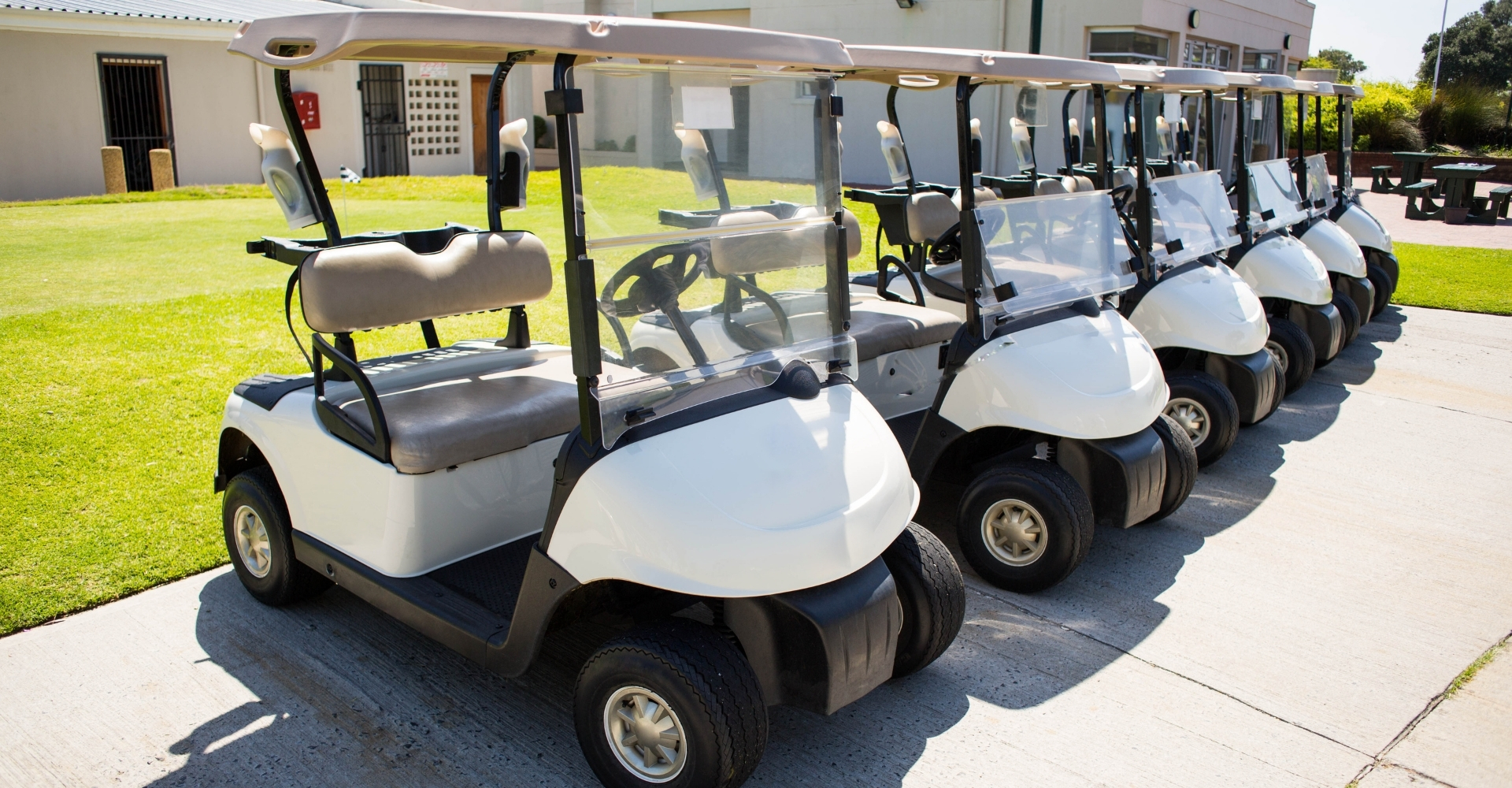
Walk through any well-run resort, hospital campus, or large industrial facility in India today, and you will almost certainly spot one: a staff member moving silently across the grounds, ferrying guests or handling equipment without a drop of fuel or a trace of exhaust. That person is riding an electric golf cart, and the fact that nobody around them gives it a second glance is perhaps the most telling sign of how far mini electric vehicles have come. Getting to this point took time. Technology had to mature, priorities had to shift, and enough people had to realise that not every short trip justifies a full-sized vehicle running on fuel. Mini electric vehicles are available now. On campuses, in warehouses, across airports and industrial sites throughout India, they have moved well past the experimental stage into something businesses actually rely on. India's policy direction reflects this. NITI Aayog has set a target of 30 per cent electric vehicle penetration across all categories by 2030, with compact and utility formats singled out as key growth drivers. For any business still sitting on the fence about greener transport, the window for early adoption is narrowing faster than most expect.
The Origin of Electric Golf Carts
Battery-powered carts began appearing on golf courses as early as the late 1930s. The original purpose was straightforward: help players with mobility challenges get around a large course without wearing themselves out. They were slow, basic vehicles with one job. But they did it consistently, and the idea caught on. By the 1950s, manufacturers were producing these carts at scale as golf courses worldwide adopted them as standard equipment. In hindsight, golf courses turned out to be a near-perfect testing ground for small-format electric mobility. Why they worked so well as a starting point:
-
The distances were short and predictable, well within what an early battery could handle without issue.
-
The speeds were low enough that the motors of the time could deliver them consistently and without strain.
-
The people using them were a large, steady group who valued the convenience and were happy to pay for it.
-
There were no road compliance requirements either, which made getting them into use far simpler than it would be today.
Over the decades that followed, the electric golf buggy grew into something considerably more sophisticated. Battery life extended, suspension improved, build quality strengthened, and manufacturers began paying attention to buyers with no interest in golf whatsoever.
From Golf Courses to City Streets
The shift from golf courses to commercial and industrial use happened gradually. The same qualities that made these vehicles effective on a fairway also made them equally useful on a factory floor, a university campus, or a heritage tourism site. India's government recognised this potential and acted on it. The Ministry of Heavy Industries launched the FAME II scheme (Faster Adoption and Manufacturing of Electric Vehicles) to accelerate adoption across multiple segments, including compact utility vehicles used in institutional and industrial settings. Today, electric golf carts for city use appear across a wide range of sectors.
| Sector | Common Application |
|---|---|
| Hotels and Resorts | Guest transport, luggage handling |
| Airports and Railway Stations | Passenger assistance, tarmac operations |
| Educational Institutions | Campus mobility for staff and visitors |
| Factories and Warehouses | Personnel transit, internal goods movement |
| Theme Parks and Zoos | Visitor rides, staff patrol |
| Temples and Heritage Sites | Mobility support for elderly and differently-abled visitors |
Street-legal golf carts are now recognised as a vehicle category in several Indian states, and their presence in gated communities, tech parks, and large campuses is growing year on year.
Key Benefits of Mini Electric Vehicles
The appeal of e-cart vehicle solutions goes well beyond environmental responsibility. For businesses, the financial and operational case is just as strong.
-
Lower Running Costs
Charging costs a fraction of what petrol or diesel does for the same distance. For fleet operators running vehicles across multiple shifts, those savings are not a rounding error. They build into something significant pretty quickly.
-
Simpler Maintenance
Less mechanical complexity means the vehicles just need less attention. Fewer parts fail, service intervals stretch out, and the repair costs over several years look very different from what a gas-powered fleet would run you.
-
Zero Emissions at the Point of Use
Properties with sustainability goals or ESG reporting requirements need changes that actually show up somewhere, and switching to battery-powered golf carts is one that does.
-
Easy to Scale and Operate
Whether a facility needs two vehicles or twenty, these carts fit into existing operations without specialist training or significant infrastructure investment. According to the Bureau of Energy Efficiency, institutional and industrial sectors are among the primary focus areas for cleaner mobility adoption in India over the coming decade.
Features of Modern Electric Golf Carts
Today's electric utility vehicle is a long way from the basic cart that first appeared on a golf course in the 1930s. Real-world operational demands have driven genuine engineering improvements across every major component.
| Feature | What It Means in Practice |
|---|---|
| Lithium-ion battery systems | Longer range, faster charging, extended service life |
| Regenerative braking | Recovers energy during stops, extending each charge cycle |
| Weatherproof body construction | Reliable performance in outdoor conditions year-round |
| Seating (2 to 12 passengers) | Scales from personal use to full group transport |
| Digital instrument panels | Simple monitoring of battery status and vehicle health |
| Cargo attachment options | Converts between passenger transport and goods movement |
For any organisation seriously evaluating electric carts for short-distance travel, these are not just features on a spec sheet. In practice, that means more vehicles running when you need them, costs that stay predictable, and a fleet that can shift as your operation changes.
The Future of Mini Electric Vehicles
The outlook for mini electric vehicles for urban mobility across India is clear. Urban congestion is growing in cities of every size. Fuel prices remain unpredictable. And sustainability expectations, once treated as optional, are increasingly becoming baseline requirements for businesses across sectors.Where growth is likely to be strongest:
- Tier 2 and Tier 3 cities, as charging infrastructure continues to expand
- Large gated communities and planned residential developments
- Last-mile logistics and delivery operations
- Heritage tourism and pilgrimage sites are managing high visitor volumes
India's Vahan dashboard has recorded consistent year-on-year growth in electric vehicle registrations across compact and utility categories, reflecting actual purchasing decisions rather than forecasts alone. Organisations that invest in an electric golf buggy or utility vehicle now will be better positioned, both operationally and financially, as standards tighten across sectors.
Where the Road Leads Next
Ninety years is a long time to be in the business of building vehicles, and Sutlej Automotives has spent all of them doing exactly that. Founded in Jalandhar, Punjab, in 1935 as a small workshop making bullock carts, the company has grown into one of India's recognised manufacturers of electric golf carts, golf buggies, and electric utility vehicles. Our clients span hotels, airports, educational institutions, temples, industrial estates, theme parks, and more, across the length and breadth of the country. If your organisation is ready to buy golf cart solutions built for Indian conditions, long-term reliability, and genuine operational value, ours is a name worth knowing. For more information or to schedule an appointment, feel free to call our experts at Sutlej Automotives.

Sutlej Automotives
Driving Sustainable Mobility in India

