
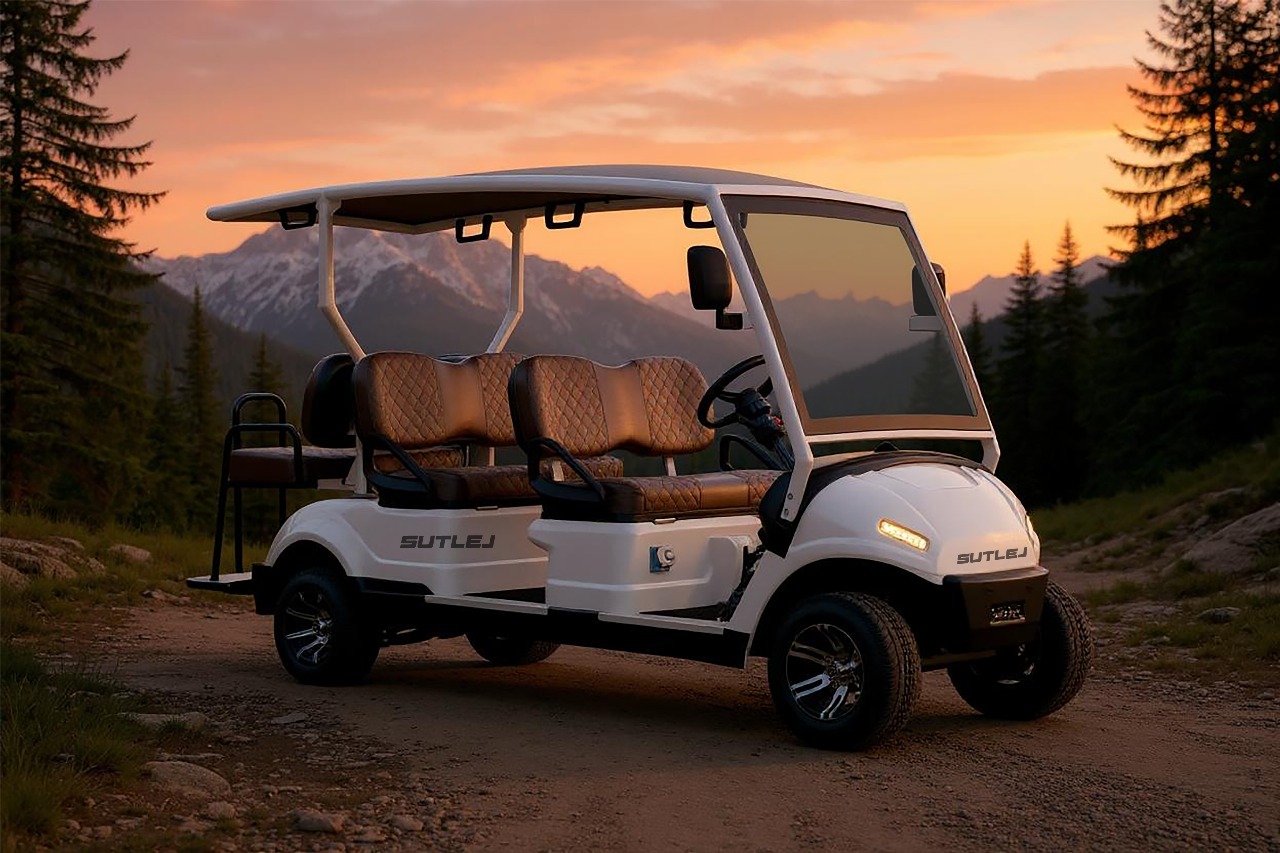
Ask most buyers what they need, and they will give you a number. Four seats, six seats, whatever fits the budget. Few stop to ask how those seats should sit, how people will move in and out, or what happens once the shuttle is actually running its route. That gap is where most seating decisions go wrong.
Sutlej Automotives builds electric golf carts, golf buggies, and e-buses for hotels, resorts, temples, educational institutions, airports, railway stations, tourist attractions, parks, zoos, factories, tech parks, warehouses, theme parks, and industrial estates across India. Across all of these, the electric shuttle seat layout matters more to performance than the seat count ever does.
The Seat-Count Trap: Why Buyers Default to "More Is Better"
A higher electric shuttle seating capacity feels like the safe choice. Buy more seats, move more people, problem solved. Except it rarely plays out that way.
A poorly planned golf cart seating arrangement can slow boarding down instead of speeding it up. It can eat into legroom and luggage space without anyone noticing until the cart is already in daily use. And a 6-seater vs 4-seater electric shuttle comparison means very little until you know how passengers actually board, sit, and exit at each stop.
Seat count works better as the last number you finalise, once the layout is already settled.
What Seat Layout Actually Controls
Four things change depending on how the seats are arranged, and all four affect daily use more than most buyers expect.
Boarding and Exit Speed During Peak Hours
Shuttle boarding speed comes down to spacing and entry points. Clear rows and sensible gaps let people step in and out without holding up the next passenger. During shift changes at a factory or peak hours at a resort, that difference decides whether a route stays on schedule or falls behind by the third stop.
Passenger Comfort On Longer Routes
The longer the route, the more electric shuttle passenger comfort matters. Rows placed too tightly make a short ride feel long. Once a route stretches across a bigger campus or estate, the layout needs to hold up for the full distance, not just the first few minutes.
Legroom, Luggage Space, and Personal Space Trade-Offs
No layout maximises everything at once. More seats mean less electric shuttle luggage space. Wider spacing means fewer seats per trip. Knowing what your facility actually needs before you place the order saves you from adjusting later.
Driver Sightlines and Control Access
Seating placed too close to the driver, or seats that block a mirror, creates a problem no layout should have. Visibility and easy access to the controls come first, regardless of how the rest of the cart is arranged.
Forward-Facing vs. Face-to-Face Seating: Which Works Where
Facing seats vs. forward seats in a golf cart isn't a matter of preference. It depends on what the shuttle is doing and where.
| Layout | Where it fits | Why it works |
|---|---|---|
| Forward-facing | Airports, factories, industrial estates | Keeps boarding quick and orderly at busy stops |
| Face-to-face | Hotels, resorts, tourist attractions | Fits a slower, more relaxed pace |
| Mixed layout | Educational institutions, tech parks | Covers different routes through the same day |
Forward-Facing Layouts For Airports and Factories
Passengers know exactly where they are headed and step in without confusion. At a busy airport terminal or a factory floor with fixed shift timings, that clarity keeps things moving.
Face-to-Face Layouts for Hotels, Resorts, and Leisure Transport
A resort guest moving between the lobby, the gardens, and an attraction is not in a hurry. Face-to-face seating fits that pace and gives the ride a more social feel.
Mixed Layouts for Multi-Purpose Fleets
Educational institutions and tech parks rarely use a shuttle for just one kind of trip in a day. A fleet built on mixed layouts covers both without forcing every vehicle to compromise.
How Seat Layout Affects Accessibility
Accessibility works best when it is part of the original layout decision, not something fixed afterwards.
Boarding Ease For Elderly or Mobility-Limited Passengers
Temples, resorts, and tourist attractions across India see a steady flow of elderly visitors. Wider entry points and manageable step heights make a real difference to how easily they board.
Handrail and Step Height Considerations By Layout
Handrails and step heights need to match the layout, not be added as an afterthought. A layout that ignores this turns a simple boarding step into a genuine difficulty for someone who needs support.
Wheelchair or Assisted-Boarding Accommodations
If your facility regularly serves visitors who need assisted boarding, mention it while the layout is still being finalised. It is far easier to plan for this upfront than to retrofit a cart once it's already been delivered.
Questions to Ask Before Choosing a Seat Layout
A few honest answers here will do more for your decision than any spec sheet.
How many passengers actually board and exit at each stop? That tells you whether boarding speed or ride comfort should lead the decision. Will the route regularly involve luggage, equipment, or mobility aids? If so, the layout needs space set aside for that, not seats squeezed in around it. Is the route stop-heavy, with frequent pickups and drop-offs, or closer to a continuous loop around a perimeter or campus? Stop-heavy routes favour layouts built for speed. Loops can afford to prioritise comfort instead.
Talk to Sutlej Automotives About the Right Layout
Sutlej Automotives manufactures electric golf carts, golf buggies, and e-buses across multiple seating configurations, serving hotels, resorts, temples, educational institutions, airports, railway stations, tourist attractions, parks, zoos, factories, tech parks, warehouses, theme parks, and industrial estates.
The best seat configuration for electric shuttle use is the one built around how your passengers actually move through your facility, not the one with the most seats listed on a brochure. Reach out to Sutlej Automotives to work through a layout suited to your route, your passengers, and how your facility runs day to day.

Sutlej Automotives
Driving Sustainable Mobility in India


