
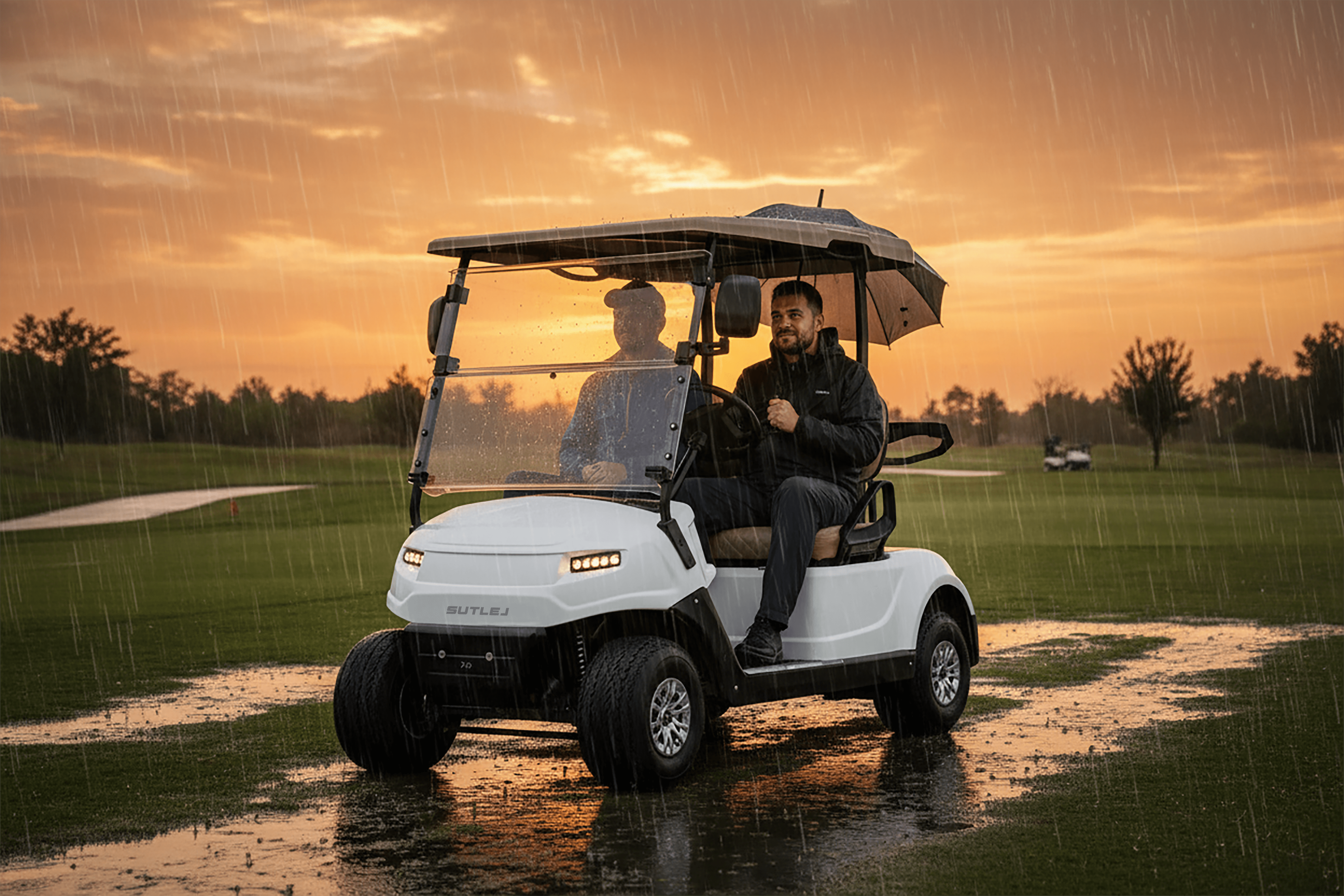
Two electric vehicles roll off the same line with the same battery. A year later, one finishes its shift without trouble. The other needs a top-up by lunch. Fleet operators run into this often, and the usual assumption that the battery is simply weaker is rarely the real story. Sutlej Automotives manufactures electric golf carts, electric golf buggy models, electric utility vehicle solutions, and mini electric vehicles for campuses, resorts, and industrial sites from our facility in Jalandhar. Most buyers looking to buy golf cart models focus on specifications alone, but what actually separates a vehicle that holds its range for years from one that fades fast is daily habits.
Why EV Range Drops Even Between Identical Vehicles
Range is not a fixed number stamped at the factory. It shifts with how a vehicle is charged, loaded, and driven. Two carts bought on the same invoice can end up worlds apart within a year, based purely on the routines their operators followed. Once you understand why EV range drops, electric fleet management stops feeling like guesswork.
Maintenance Habits That Quietly Reduce Range
-
Charging Without a Fixed Routine
Letting a battery run completely flat before every charge, or leaving it on the charger long after it is full, is one of the most common electric vehicle charging mistakes fleet teams make. Both habits stress the cells more than a steady, predictable schedule would.
-
Ignoring Tire Pressure and Wheel Alignment
Underinflated tyres and misaligned wheels force the motor to work harder for the same trip. Neither issue looks urgent on any single day, but together they chip away at range week after week.
-
Pushing Preventive Maintenance to "Next Month"
Loose connections, worn brakes, and small mechanical drag rarely announce themselves early. EV preventive maintenance exists to catch these issues before they lead to a breakdown, and skipping it is one of the electric vehicle charging mistakes that quietly compounds over time. It is also one of the simplest battery maintenance tips to follow.
What Causes an Early Range Drop
Every battery loses some capacity with age. That is expected and gradual. A sharp drop within the first year or two is not normal and should prompt a service check.
- Battery ageing versus poor maintenance. Gradual decline is normal wear. A sudden dip usually points to a maintenance gap, not the battery reaching the end of its life, and is often the real answer to why EV range drops so early.
- Overloading beyond rated capacity. Every electric utility vehicle and electric golf cart is built around a specific seating or cargo limit. Crossing it regularly forces the electric utility vehicle battery to supply more power than it was designed for.
- Rough driving habits. An abrupt or quick increase in speed and deceleration uses more energy than steady driving. Operators who ease off the pedal consistently get more out of the same charge.
Weather and Load: Two Factors Affecting EV Range
Environmental conditions matter more than most fleet managers expect, and this holds in Punjab, where summer heat and winter fog sit at opposite extremes. High temperatures accelerate battery wear, especially when a vehicle charges in direct sunlight, while cold mornings slow charging efficiency and leave a vehicle feeling sluggish until it warms up. Dust and humidity add their own strain if connections are not checked. These remain the most common factors affecting EV range on Indian roads, and while you cannot control the weather, you can control how the fleet responds to it.
Building Better Electric Vehicle Battery Care
- Charge in a shaded or covered spot, especially through peak summer months
- Let the battery cool after a long, heavy-load trip before plugging it back in
- Stick to one consistent charging schedule instead of random top-ups
- Match charger settings to your specific battery type
- Store vehicles with a partial charge rather than leaving them fully drained for long stretches
Sutlej Automotives offers both EV Tubular and Lithium-Ion battery options, so operators can choose whichever suits their electric utility vehicle battery needs and the fleet's operating conditions. Good electric vehicle battery care is less about a single big decision and more about consistently repeating these steps.
Early Warning Signs Worth Watching
| What You Notice | What It Usually Means |
|---|---|
| Charging takes longer than before | Battery efficiency slipping |
| Range drops on a familiar route | Tire, alignment, or load issue |
| The vehicle struggles on slopes | Motor or battery under strain |
| Battery feels warm right after plugging in | Charging routine needs adjusting |
| Frequent mid-day top-ups | Maintenance is overdue |
Catching even one of these early usually means a quick fix instead of a costly one.
How to Improve EV Range Without a New Battery
Most operators asking how to improve EV range assume it means a replacement battery. It rarely does.
- Book EV preventive maintenance on a fixed schedule, not only when something breaks
- Keep tyres inflated correctly and wheels aligned
- Coach operators toward smoother acceleration and braking
- Respect seating and cargo limits on every trip
- Keep vehicles out of direct heat while charging or parked
- Wipe down electrical connections regularly to prevent dust buildup
These habits form the backbone of solid electric fleet management and cost far less than an early battery replacement.
Choosing a Fleet Built to Last
The vehicle you choose sets the ceiling for how well it performs. The maintenance you follow determines how close it gets to that ceiling. < a href="https://sutlejautomotives.com/">Sutlej Automotives builds electric golf carts, electric utility vehicles, e-cart vehicle models, and mini electric vehicles engineered for Indian roads and daily commercial use. If you are ready to buy golf cart models for your property, want to upgrade an ageing electric golf buggy fleet, or need an e-cart suited to campus or resort operations, our team can help you choose the right fit and build in these battery maintenance tips from day one. Get in touch with Sutlej Automotives today and put a fleet on the ground that holds its range and is backed by service support you can count on.
Sutlej Automotives
Driving Sustainable Mobility in India

